Louisville Zoo Develops Critical Monarch Butterfly Habitat
In an effort to create additional critical habitat for monarch butterfly conservation and other native pollinators, the Louisville Zoo has become a program partner of the AZA SAFE (Saving Animals From Extinction) North American Monarch butterfly program. Since 2016, the Zoo has been active in monarch butterfly conservation and, in 2017, became a Certified Monarch Waystation through MonarchWatch.org.
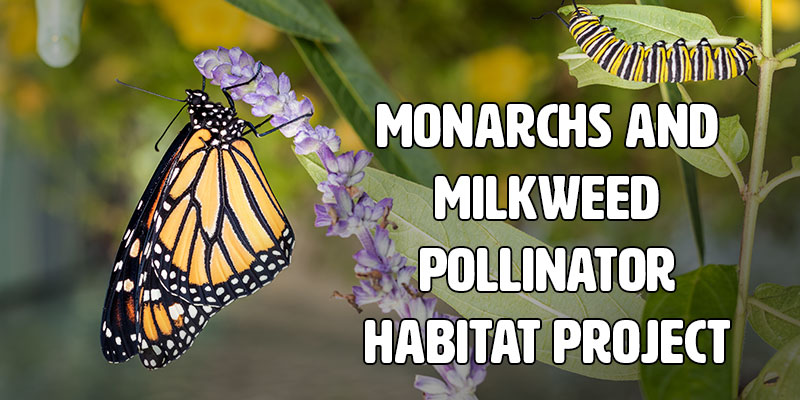
This year, the Zoo created the 'Monarchs and Milkweed Pollinator Habitat Project' to provide an opportunity for people to develop a connection with nature through habitat development and have a direct impact on the conservation of the monarch butterfly. The project will provide educational resources to those in our community and encourage families and organizations to plant their own pollinator habitats.
Community Partnerships
As part of this program, the Zoo joined with two community partners for Fall 2021 to plant and develop pollinator habitats. A pollinator garden was planted at Seven Counties Services at 2225 West Broadway, and a garden was planted at Bellarmine University at 2001 Newburg Rd.
"We're excited about our partnership with the Louisville Zoo to create a monarch waystation at our Child & Family West clinic. We appreciate this unique way that we can contribute to a local conservation campaign to preserve the monarch migration cycle." — Abby Drane, President & CEO, Seven Counties Services / Bellewood & Brooklawn
"A Monarch Watch Certified pollinator garden is not just a wonderful project from the standpoint of expanding the habitat for important pollinators like bees and butterflies, but it enhances our campus environment and programming." — Dr. Kate Bulinski, Bellarmine University
Why Monarchs Matter
The leading cause of monarch butterfly population decline has been the continuous loss of habitat since the 1960s, with an 80% decline since the 1990s. In the U.S., this is due to the conversion of habitat into agricultural land, the use of herbicides to remove milkweed plants, and pesticides that destroy agricultural crops. Monarch caterpillars require milkweed plants to feed on in order to complete their life cycle.