
Polar Bears International: News From Churchill
Dispatch from the Tundra
Temperatures remained unseasonably warm around Churchill throughout Polar Bear Week, hovering just below freezing during the day. Still, a bitter windchill is just beginning to accelerate the sluggish formation of ice along the coast of the Hudson Bay, and the bears have begun to test the edges hopefully.
During the last week of Tundra Connections for the season, the panel discussed the role of STEM (Science, Technology, Engineering, and Math) in studying polar bears and their Arctic habitat.
The Science Team
This week, Lance Rougeaux (Director of the Discovery Educator Network) moderated a panel of scientists including behavioral ecologist Dr. Megan Owen, climate modeling specialist Dr. Kyle Armour, and biologist Dr. Nicholas Pilfold. The panel discussed connections between polar bears and penguins, the curious case of the "grolar" bear (a polar/grizzly hybrid), and took viewers on a virtual tour of the Churchill Northern Studies Centre.
Additional live chats focused on the similarities and differences between the 19 polar bear populations around the Arctic, and the role of technology in studying wild polar bears — including satellite tracking, remote cameras, and genetic sampling that allow scientists to monitor populations without disturbing the animals.
Louisville Zoo's Polar Bear Connection
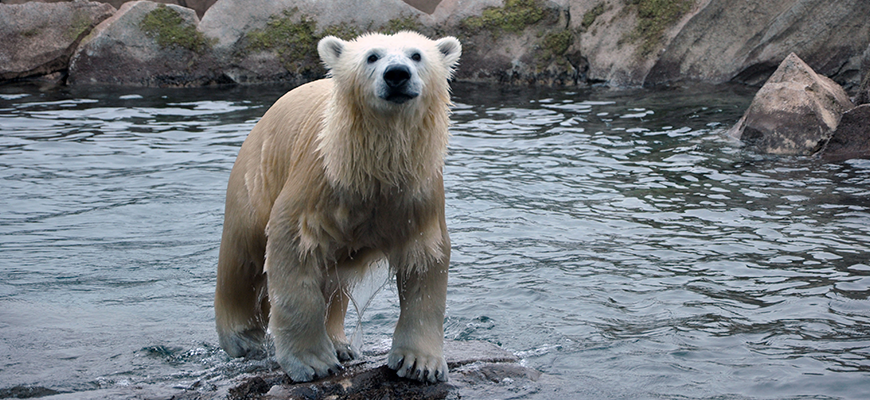
Louisville Zoo is home to Qannik (Inuit for "snowflake"), a polar bear rescued as an orphaned cub in Alaska. The Zoo's participation in polar bear programs and its partnership with Polar Bears International supports critical research into the effects of climate change on polar bear habitat, denning behavior, and long-term survival prospects.